
How to Evaluate a Mutual Fund Before Investing: A Beginner Friendly Checklist

A step-by-step checklist to help beginners evaluate mutual funds before investing covering fund category, past performance, risk, expense ratio, portfolio, and tax rules so you choose funds that actually fit your financial goals instead of chasing last year’s top performer.
Mutual Fund Costs Explained: Expense Ratio, Exit Load and Other Charges

This guide breaks down every major cost that affects mutual fund returns in India, including the expense ratio, exit load, Securities Transaction Tax (STT), transaction charges, stamp duty and distribution costs. It explains the difference between direct and regular plans, shows how exit load is calculated on lump-sum and SIP investments with worked examples, and clarifies why entry load no longer applies. Backed by SEBI and AMFI references, the article helps investors understand which costs are recurring versus one-time, how these charges compound over long holding periods, and practical steps to reduce unnecessary mutual fund expenses helping readers make more cost-efficient investment decisions.
NAV in Mutual Funds: Meaning, Formula & Examples

A complete guide to understanding Net Asset Value (NAV) in mutual funds — what it means, how it’s calculated, and why a lower NAV doesn’t make a fund cheaper or better. Includes real examples, NAV vs share price comparison, and what actually matters when choosing a mutual fund.
Index Funds vs Active Mutual Funds: Which One Should You Choose?

Confused between index funds and actively managed mutual funds? This guide breaks down how each works, their costs, risks, performance expectations and diversification approach helping first-time and retail investors understand which strategy, or combination of both, fits their financial goals, risk appetite and investment horizon.
Types of Mutual Funds in India: Complete Guide to Mutual Fund Categories

Explore the types of mutual funds in India under SEBI’s 2026 framework, including equity, debt, hybrid, life cycle, index funds and more.
SIP vs STP vs SWP, What Do These Mutual Fund Terms Really Mean?
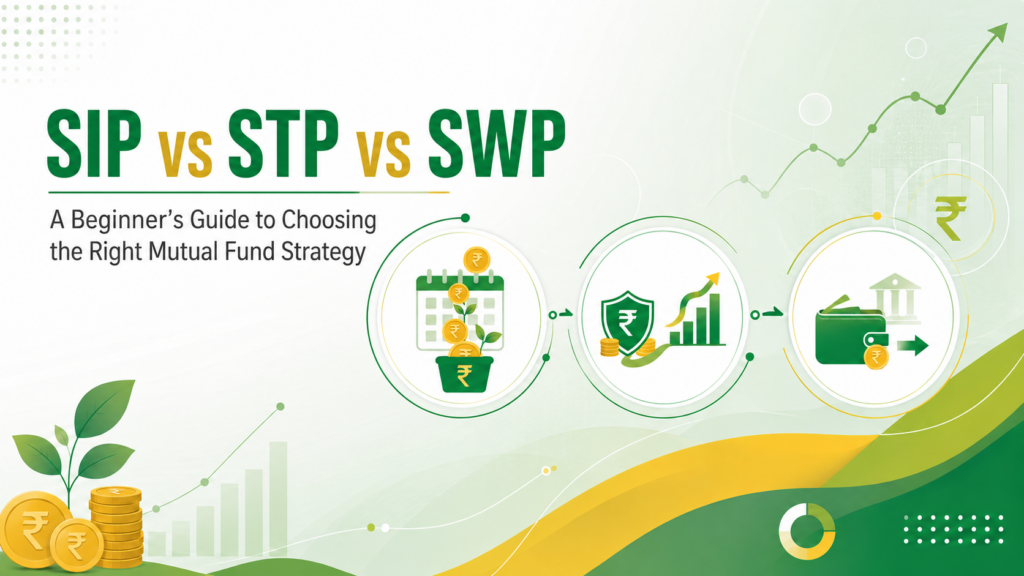
Confused between SIP, STP, and SWP? This beginner-friendly guide explains what each term means, how they work, their key differences, and when to use them to achieve your financial goals through mutual fund investing.
The Power of Compounding in Mutual Funds

Start investing early, stay consistent, and let compounding work its magic. Discover how mutual funds can transform small, regular investments into long-term wealth through the power of compounding.
How to Start Investing in Mutual Funds in India, A Step-by-Step Guide for Beginners

Investing in mutual funds is a smart way to build long-term wealth, but getting started can seem overwhelming. This guide explains how to start investing in mutual funds in India, covering financial goal setting, KYC, SIP vs lumpsum investments, and portfolio planning. Learn the essential steps to make informed investment decisions and begin your wealth creation journey with confidence.
What Are Mutual Funds? A Simple Guide for First-Time Investors

Most people want their money to grow, but choosing the right investments can feel overwhelming. With thousands of stocks, bonds, and other investment options available, knowing where to begin is often the biggest challenge.
7 Benefits of Mutual Funds, A Complete Guide for Indian Investor

Thinking about investing but unsure where to begin? Mutual funds offer professional management, diversification, affordability, and flexibility, making them one of the most preferred investment options for Indian investors. Here’s why mutual funds deserve a place in your financial journey.