 SIF
SIF
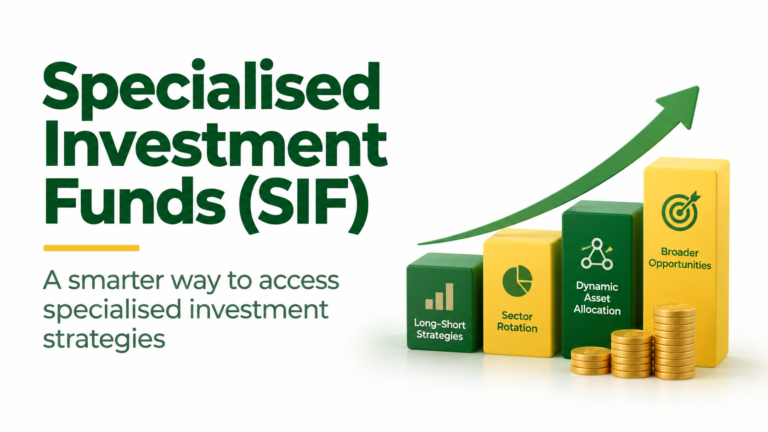
Specialised Investment Funds (SIF) Explained: The New Middle Ground Between Mutual Funds and PMS
A practical breakdown of SEBI's new SIF category minimum investment, strategies, risk, liquidity and taxation and how it compares to…


Investing has become easier, but making the right investment decisions has not.
There are thousands of financial products, constant market news and countless opinions about where your money should go. A friend may recommend a mutual fund, a colleague may prefer fixed deposits, while someone else may suggest gold or real estate.
The problem is that an investment that suits someone else may not suit you.
Your income, financial goals, investment horizon, family circumstances and ability to handle losses are different. This is why professional financial guidance can be useful. A good financial professional can help bring structure to your decisions, rather than simply recommending an investment product.
For investors looking at mutual funds, SJS Finserve is a Mutual Fund Distributor (MFD) that helps investors explore mutual fund investments through a goal-based approach and portfolio support.
Risk is not just about how comfortable you feel when markets fall.
Your investment horizon and financial circumstances also determine how much loss you can realistically withstand. Someone investing for a long-term goal may have more capacity to handle short-term volatility than someone who needs the money within a few years.
A professional can help evaluate these factors before investments are selected.
Instead of asking only, “Which fund has performed best?”, the more important questions become:
What is the money being invested for?
When will it be needed?
How much volatility can you tolerate?
What happens if markets fall before the goal?
This helps ensure that investment decisions are connected to your actual financial situation.
Investing without a clear objective can turn into a collection of products rather than a financial strategy.
Retirement, children’s education, buying a home and long-term wealth creation may all require different approaches because their timelines and financial requirements are different.
A goal-based approach considers factors such as:
| Factor | Why it matters |
|---|---|
| Financial goal | Defines what the investment is meant to achieve |
| Time horizon | Helps determine the appropriate investment approach |
| Income and savings | Determines how much can be invested |
| Risk profile | Helps assess suitable levels of market exposure |
| Existing investments | Shows how the current portfolio fits into the overall plan |
At SJS Finserve, the focus is on understanding these objectives before discussing suitable mutual fund options.
For additional mutual fund investor education, investors can also refer to AMFI’s Mutual Funds Sahi Hai initiative.
Many investors spend considerable time comparing mutual funds based on past returns.
But choosing good individual funds is only one part of investing. The bigger question is how those investments fit together.
Different asset classes have different characteristics. Fixed income can provide greater stability, while equity can experience short-term volatility but has the potential to support long-term wealth creation. Gold, international equity and real estate have their own risk and return characteristics.
This makes asset allocation and diversification important.
Holding five or six mutual funds does not automatically mean you have a well-diversified portfolio. Several funds may have similar underlying holdings, creating more concentration than the investor realises.
Regular portfolio reviews can help identify such overlaps and ensure that investments continue to reflect the investor’s objectives.
One of the hardest parts of investing is managing your own behaviour.
When markets rise, investors may be tempted to invest more because recent returns look attractive. When markets fall, fear can lead investors to sell or stop their SIPs, Professional support can provide an additional layer of discipline.
The key question during market volatility is:
Has my financial goal changed, or has only the market changed?
If the goal, investment horizon and financial circumstances remain the same, a short-term market movement may not necessarily require a major change to the investment strategy.
A professional can help investors review the situation objectively instead of reacting to headlines.
Managing investments independently requires time.
Investors need to research funds, understand risks, monitor their portfolio and review whether their investments remain appropriate as circumstances change.
For someone managing a career, family and other responsibilities, this can become difficult.
A professional can help simplify the process by filtering investment options and providing ongoing portfolio support.
This does not mean investors should stop understanding their money. Rather, it can allow them to make decisions with greater structure while reducing the time spent navigating financial information.
Before choosing a financial professional, investors should understand how that professional is regulated and compensated.
A Mutual Fund Distributor (MFD) distributes mutual fund products and earns commissions from Asset Management Companies. A SEBI Registered Investment Adviser (RIA) operates under SEBI’s Investment Adviser framework and charges clients for advisory services.
These are different business models.
Investors can read SEBI’s investor guidance on Investment Advisers to understand the distinction. SEBI’s regulatory information can also be accessed through its Investment Adviser regulations and registration resources.
SJS Finserve is a Mutual Fund Distributor (MFD). The company earns commissions from Asset Management Companies for mutual fund distribution.
This distinction is important for transparency. Investors should understand the nature of the relationship, the compensation structure and the rationale behind any investment recommendation before investing.
Not every investor needs professional help. Some investors have the time, knowledge and discipline to manage their portfolios independently.
For others, professional support can be valuable, particularly when they have multiple financial goals, several investments or difficulty making decisions during volatile markets.
The real benefit is not simply finding a particular mutual fund. It is having a structured process for thinking about goals, risk, asset allocation, diversification and portfolio reviews.
If you want to bring greater structure to your mutual fund investments, SJS Finserve can help you review your financial goals and existing portfolio and explore suitable mutual fund options.
No. You can invest independently, but professional guidance can help you assess risk, align investments with your goals and manage your portfolio more systematically.
A Mutual Fund Distributor helps investors select and invest in mutual fund products based on their financial goals and risk profile. MFDs earn commissions from Asset Management Companies for distributing mutual funds.
An MFD distributes mutual fund products and earns commissions from AMCs. A SEBI Registered Investment Adviser (RIA) provides advisory services under SEBI’s Investment Adviser framework and charges clients for those services.
A professional can help investors avoid emotional decisions, review their portfolio and assess whether changes are actually required based on their goals and investment horizon.
SJS Finserve is a Mutual Fund Distributor that helps investors approach mutual fund investing through a goal-based process, portfolio review and ongoing investment support. SJS Finserve earns commissions from AMCs for mutual fund distribution.
SIF
A practical breakdown of SEBI's new SIF category minimum investment, strategies, risk, liquidity and taxation and how it compares to…
 Investment Strategies
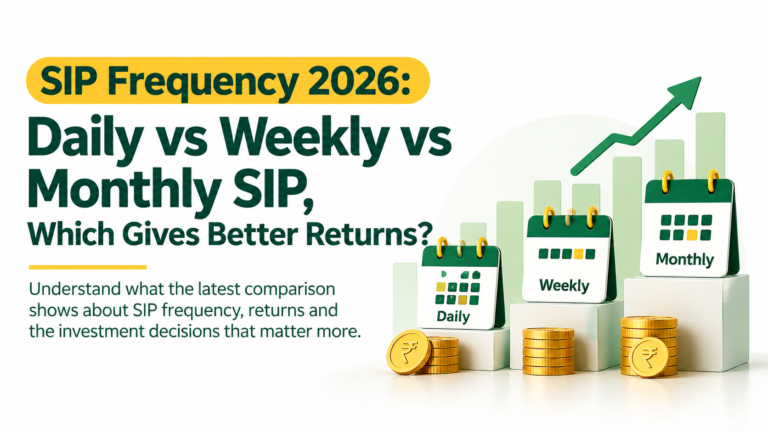
A data-backed comparison of daily, weekly, and monthly SIP returns across five equity fund categories and five investment horizons. Find…
 Market Analysis
Equity mutual fund inflows rose to ₹29,329 crore in August 2026, up 19% from July, driven by record small-cap inflows…