 SIF
SIF
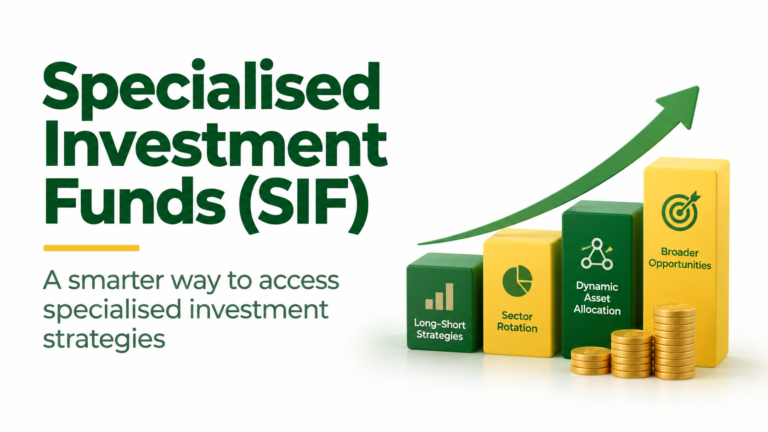
Specialised Investment Funds (SIF) Explained: The New Middle Ground Between Mutual Funds and PMS
A practical breakdown of SEBI's new SIF category minimum investment, strategies, risk, liquidity and taxation and how it compares to…


India’s mutual fund industry has changed dramatically since the original regulatory framework was introduced in 1996. Assets under management reached ₹73.73 lakh crore in FY26, while monthly SIP contributions reached ₹32,087 crore in March 2026, according to the data provided for this analysis.
Against that backdrop, SEBI has introduced the SEBI Mutual Fund Regulations, 2026, effective April 1, 2026.
For investors, the headline changes are familiar: TER is being unbundled, expense caps have been reduced, fund categories are being tightened, portfolio overlap is being monitored and Life Cycle Funds have been introduced.
But the practical question is different:
Do these changes mean you should change your mutual fund portfolio?
For most investors, not automatically. The more useful exercise is to determine which of your existing schemes are actually affected and whether the new rules expose problems that were previously difficult to see.
The biggest change is the way mutual fund costs are disclosed. Previously, investors largely saw a bundled Total Expense Ratio, or TER. Under the new framework, the fund house’s base expenses are represented through the Base Expense Ratio, or BER, while brokerage and statutory charges are disclosed separately.
The supplied regulatory analysis gives the following framework:
| Cost parameter | Pre-April 2026 | From April 2026 |
|---|---|---|
| Equity expense cap below ₹500 crore AUM | 2.25% TER | 2.10% BER |
| Index fund / ETF | 1.00% TER | 0.90% BER |
| Close-ended equity schemes | 1.25% TER | 1.00% BER |
| Cash market brokerage | 12 bps | 6 bps |
| Derivatives brokerage | 5 bps | 2 bps |
| Exit-load-linked additional allowance | 5 bps | Removed |
The operational framework is set out in SEBI’s March 20, 2026 Master Circular for Mutual Funds.
A lower BER should not automatically be interpreted as a lower total cost. Brokerage and statutory charges are now shown separately. Comparing a 2026 BER directly with an old TER can therefore produce the wrong conclusion.
At SJS Finserve, this is one of the numbers we would examine at the portfolio level rather than scheme by scheme. The relevant question is not simply “Which fund has the lowest BER?” but what is the effective cost of the portfolio you actually own?
The second major change is around what different schemes actually own. Under the new framework, Value and Contra funds can both be offered by an AMC subject to the stated portfolio overlap limit. Sectoral and thematic schemes also face a 50% overlap requirement, with a longer transition period for compliance.
This matters because the number of funds in a portfolio can create a false sense of diversification.
If two schemes have substantial exposure to the same companies, owning both may add less diversification than the fund names suggest.
SEBI’s new overlap disclosures should make this easier to identify. But calculating whether the overlap materially changes your portfolio’s sector, stock and risk concentration requires looking across the schemes together.
That is precisely where a portfolio-level review can uncover something a fund-by-fund review misses.
Investors can also read SJS Finserve’s analysis on whether having two SIPs in the same mutual fund actually improves returns. The broader lesson is the same: multiple investments do not automatically create meaningful diversification.
SEBI is phasing out fresh investments in retirement and children’s funds while introducing Life Cycle Funds, which use a glide-path allocation over a 5 to 30 year maturity period.
The attraction is straightforward. Asset allocation can shift from equity toward debt as the target date approaches, without the investor having to manually switch between funds. But the suitability question is more important than the product structure.
The supplied material specifies exit loads of 3% within one year, 2% within two years and 1% within three years. Investors therefore need to assess whether the fund’s maturity and liquidity structure actually fit the goal.
For an investor considering a Life Cycle Fund, SJS Finserve’s review would focus on the goal date, required corpus, current allocation and the fund’s glide path, rather than treating the category as automatically suitable for retirement or children’s goals.
Instead of reacting to every regulatory change, investors can assess their portfolio through four questions:
| SJS 4-Point Portfolio Fit Check | What we examine |
|---|---|
| 1. Cost | BER, brokerage and other applicable costs |
| 2. Concentration | Stock, sector and scheme-level overlap |
| 3. Category Fit | Whether each fund still matches its intended role |
| 4. Goal Fit | Whether risk, horizon and allocation match the financial goal |
This framework turns the 2026 regulations into a portfolio exercise rather than a news event.
It can also identify issues that are difficult to assess from a single fund factsheet, particularly when multiple schemes, tax positions and financial goals interact.
Existing investors should not act solely because fresh investments in these categories have been discontinued.
Instead, monitor communications from the relevant fund house regarding mergers, restructuring or changes to the scheme.
The tax impact also needs attention. A restructuring or merger can have capital gains implications depending on how it is implemented and the investor’s existing gains.
This is one area where the correct decision cannot be made from the regulation alone. The scheme, transaction structure, purchase history and investor’s tax position all matter.
The effect of a small expense reduction becomes clearer over a long holding period.
For the illustration supplied, ₹10 lakh invested for 20 years at a 12% gross annual return produces approximately:
| Expense | Net annual return | Approx. corpus |
|---|---|---|
| 2.00% | 10.00% | ₹67.27 lakh |
| 1.90% | 10.10% | ₹69.00 lakh |
| Difference | ₹1.73 lakh |
The calculation shows why costs deserve attention in long-term portfolios.
However, investors should not select funds based on expense ratio alone. A cheaper fund that creates unwanted concentration or does not fit the portfolio’s objective may not be the better investment.
The right response to the 2026 regulations is a portfolio review, not portfolio churn.
Focus first on schemes affected by category changes, mergers or restructuring. Then examine your actual cost under the new BER framework and look at overlap across your holdings.
Finally, check whether each fund still has a clear job in your portfolio.
The new disclosures will make some of this information easier to access. The harder question is what the information means when all your investments are considered together.
That is where professional review becomes useful.
At SJS Finserve, we would look at the regulatory changes through the four-point framework of cost, concentration, category fit and goal fit.
A portfolio may appear diversified while holding overlapping schemes. A fund may appear cheaper under the new BER structure while its total costs need further examination. A scheme may continue to perform well while becoming less appropriate for the goal it was originally selected for.
These are portfolio questions, not headline questions.
If you want to know whether the 2026 SEBI changes actually require action in your portfolio, SJS Finserve can review the schemes you hold, identify overlap and cost issues, and assess whether each investment still fits your financial goals.
Book a Free Consultation with SJS Finserve before making changes based on the new rules.
The new framework changes how costs are presented by separating the fund’s base expenses from brokerage and statutory charges. Investors should therefore avoid treating the new BER figure as a direct one-to-one replacement for historical TER.
BER, or Base Expense Ratio, represents the base expenses charged by the fund within the new framework. Brokerage and applicable statutory charges are disclosed separately.
The new framework introduces a 50% overlap limit for specified scheme relationships, including Value and Contra funds and sectoral/thematic schemes as described in the supplied regulatory material. The implementation timeline varies by category.
Fresh investments in these categories are being phased out. Existing investors should monitor communications from their fund houses for any merger, restructuring or other scheme-level action.
Life Cycle Funds are a new category with a 5 to 30 year maturity structure and a glide-path allocation that changes the portfolio’s equity and debt exposure over time.
Not automatically. The appropriate response depends on the specific schemes you own, their costs, overlap, category changes, tax position and role in your financial plan.
SIF
A practical breakdown of SEBI's new SIF category minimum investment, strategies, risk, liquidity and taxation and how it compares to…
 Investment Strategies
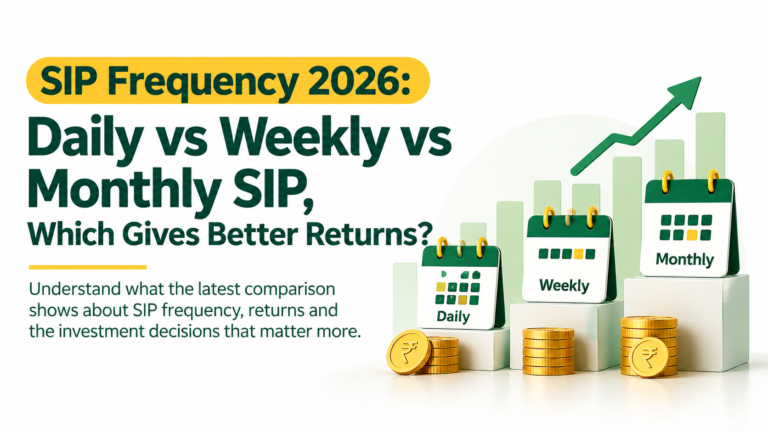
A data-backed comparison of daily, weekly, and monthly SIP returns across five equity fund categories and five investment horizons. Find…
 Market Analysis
Equity mutual fund inflows rose to ₹29,329 crore in August 2026, up 19% from July, driven by record small-cap inflows…